Supporting farmers
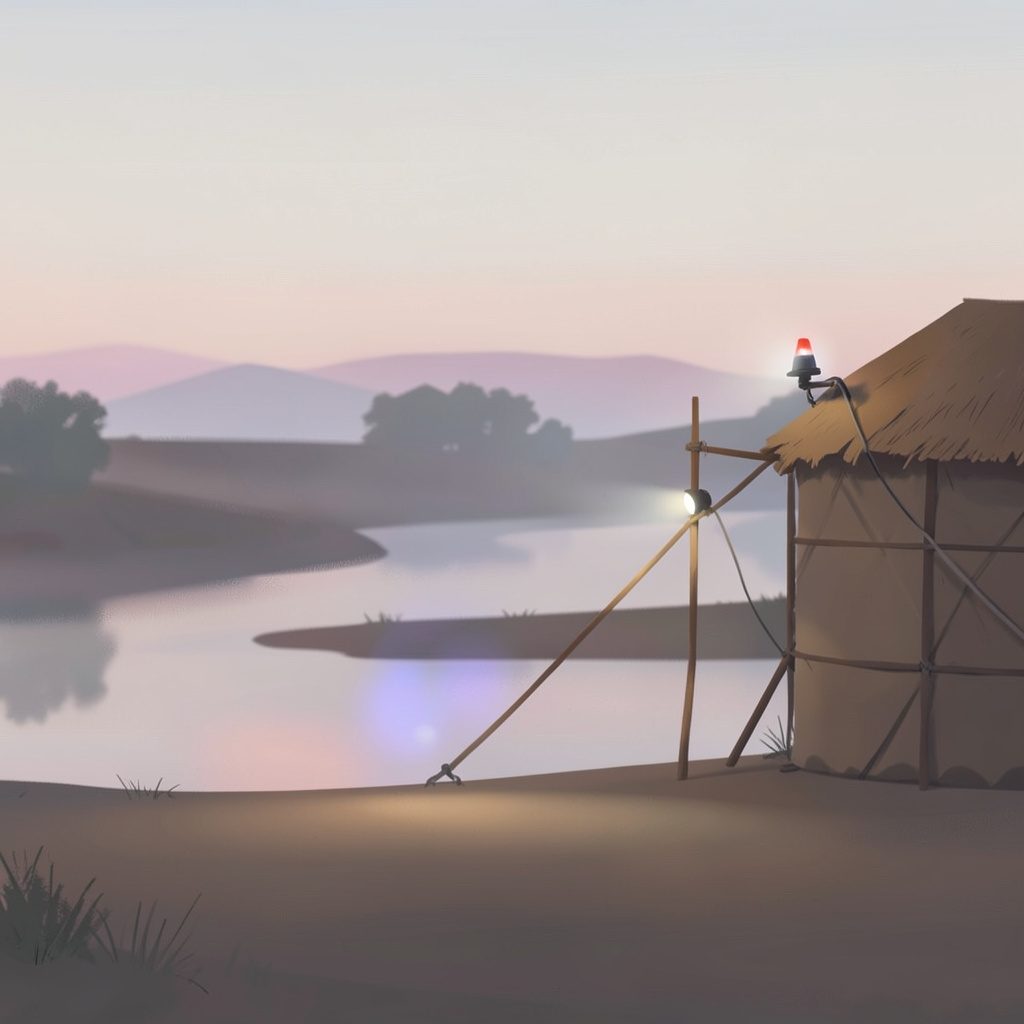
Shade cloth and self-contained motion-detecting lights with integrated sirens help protect livestock enclosures from predators.
Learn about conservancy support
Saving the desert lions
Founded in 2017, DeLHRA is a voluntary non-profit organisation working with farming communities in Namibia's Kunene region to preserve wildlife and mitigate human-lion conflict.
Explore our field updates
About DeLHRA
DeLHRA works alongside farmers and conservancies in Kunene. The organisation supplies practical tools and know-how to protect livestock, supports community-led conservation, and monitors the well-being of the region's desert-adapted lion prides.
Its vision is for farming communities to benefit directly from tourism, creating a stronger incentive for wildlife preservation.
Read our mission and visionFrom the field
This report considered the Obab Lion Pride near the Palmwag concession and Skeleton Coast, documented a poisoned collared female lion—the fifth reported in that area since October 2021—and reflected on a decade-long drought in the Kunene region.
Read the challenges reportHuman-lion conflict is one of the most difficult problems in wildlife conservation, because the animals involved are rare, wide-ranging and genuinely dangerous. In Namibia's Kunene region, desert-adapted lions share territory with pastoral and farming communities, and a single night of loss can undo months of careful herding work. DeLHRA was founded to treat this tension as a shared problem rather than a standoff between people and wildlife, bringing farmers, conservancies and conservationists into the same conversation.
The organisation's approach is rooted in local knowledge. People who live alongside lions understand their movements, their behaviour and the pressures their livestock face every day. By listening first and supplying practical equipment and techniques second, DeLHRA aims to reduce losses quickly and affordably, so that protection of livestock becomes something a herder can actually sustain rather than an ideal written into a report.
Desert lions are a distinct population, adapted to arid habitat and surviving in some of the harshest conditions in southern Africa. Their continued existence depends on large connected landscapes, and on the willingness of the communities living in those landscapes to tolerate their presence. Saving the desert lions, in other words, means keeping both the animals and the people who share their ground in good condition, which is why the work is as much social as it is technical.
Livestock protection takes many forms, and DeLHRA supports a range of them rather than a single solution. Guardian animals, reinforced kraals, improved enclosures, shade and resting structures for herders, and motion-detecting lights can all reduce the risk of a night-time attack. The emphasis is on tools that are simple, repairable and locally appropriate, because equipment that cannot be maintained in the field soon ends up unused in a corner of the compound.
Community-led conservation matters because conservation that arrives from elsewhere tends to fade when external support stops. DeLHRA works alongside existing conservancies and farming groups, encouraging local ownership of predator populations and of the land they move across. When residents have a voice in decisions, monitoring and reporting become more accurate, and the results last longer than a funded pilot project ever could.
Monitoring the well-being of the prides that share Kunene with people is essential to understanding whether mitigation is actually working. Tracking sightings, movement patterns and livestock losses gives a clearer picture of where risk concentrates and when it peaks. This information feeds back into the practical work, letting the organisation refine its tools and direct support to the places and seasons where it will protect most animals and most households.
Education and awareness form a large part of the mission. Farmers who understand lion behaviour, who know how to read the signs of an approaching pride and who can pass that knowledge to their neighbours lose fewer animals and live with less fear. Field updates, community meetings and shared experience help spread that understanding widely, turning isolated successes into a regional practice that belongs to the people using it.
As a voluntary, non-profit organisation, DeLHRA relies on the generosity of supporters who believe that a sustainable answer to human-lion conflict is possible. Donations and assistance with funding, equipment and outreach all contribute, whether that support comes as funds, materials, professional expertise or simply an introduction to someone who can help. Every contribution supports work that is measured in animals spared and households that keep their livelihoods intact.
The long-term vision is a Kunene region where desert lions are preserved and farming communities thrive side by side. That future is not guaranteed; the pressures on both wildlife and rural livelihoods are real and rapidly changing. But with local knowledge, practical protection, careful monitoring and a community that sees value in keeping the lions alive, the possibility of a permanent solution to human-lion conflict remains firmly within reach.
Where we work
Our work connects practical farmer support, habitat knowledge and records of the lions that share this landscape.
Shade cloth and self-contained motion-detecting lights with integrated sirens help protect livestock enclosures from predators.
Learn about conservancy support
Desert-adapted lions originate from Etosha and surrounds. Learn how veterinary fencing and farming pressures shaped their home ranges.
Explore lion habitatExplore background on the Ugab, Huab, Hoanib, Hoanib Floodplain, Okongwe, Obab and Achab prides and the lions associated with them.
Meet the lion pridesStay informed
Browse past field trip reports and conservation updates, including visits to the Hoanib, Huab and Ugab River areas, and a December 2021 trip to Liuwa Plains, Zambia, Nkasa Rupara, Mudumu, Kwando and Buffalo.
Visit Blog & NewsWork with us
DeLHRA signs MOUs with conservancies, assists communal and commercial farmers, and seeks to establish a compensation fund for livestock losses. The organisation sources funding through sponsors and donors.
To discuss conservation work, support, or the situation for farmers in Kunene, contact DeLHRA in Swakopmund, Namibia.
Contact DeLHRA